

Print to Page   |   Contact Us   |   Sign In
Pony Club Disciplines & Activities
Share |
The Pony Club program teaches children to ride safely on the flat, in the open and over fences, and to be able to safely and responsibly take care of their mount. This leans towards the riding disciplines of Dressage, Show Jumping and Eventing. However, Pony Club also offers instruction and competitive opportunities in other disciplines that encourage those riding skills and enhances horse knowledge. Below is a general description of each of the disciplines that Pony Club members may participate in.
 
Pony Club Competitive Disciplines
 
 
Additional Pony Club Disciplines (not currently competitive in Pony Club)


Dressage
 
The object of dressage is the harmonious development of the horse in both mind and body. Every horse, regardless of its type or use, can benefit from this training. Dressage requires the horse and rider to combine the strength and agility of gymnastics with the elegance and beauty of ballet.
 
Competitions are held at many levels, beginning with Walk-Trot and Training Level, and continuing through nine levels to Grand Prix. During a dressage test all movements and certain transitions from one gait or movement to another are numbered and scored from 0 to 10. A score of 0 means that virtually nothing of the movement was performed while a score of 10 is excellent. The individual scores are added and then calculated as a percentage of possible points to come up with a score. The highest percentage wins the class. Tests are different for each level and are written so there is a way to consistently measure the horse’s progress through the levels. Judges are looking for accuracy, obedience, suppleness of the horse, quality of the gaits, and the rider’s use of aids. There are also freestyle musical dressage tests for individual riders, pairs and groups or four and more.
 
Visit the United States Dressage Federation for more information and check out the Pony Club Dressage site for information on Pony Club activities and opportunities in the discipline of Dressage.


Eventing
 
Originally developed in the cavalries of Europe as the test of the ideal military charger, eventing is a three-phase riding competition that has now evolved into an exciting sport attracting interest from all levels of sports enthusiasts, from weekend hobby riders to professional international stars.
 
Day one: Dressage - The French term for "training”, dressage is very important to the three-day event horse, as it helps to develop the muscular strength, suppleness, obedience and maneuverability needed the other two days of competition.
Day two: Cross-Country - The object of this test is to prove the speed, endurance, and jumping ability of the horse over varied terrain and obstacles. In order to accomplish this task, the horse and rider must be at peak condition. The horse must be bold, smart and obedient, and the rider must use knowledge of pace in order to expend only as much of the horse’s energy as necessary.
Day three: Show Jumping - Not an ordinary show jumping competition, the sole object of this final test is to demonstrate that on the day after a test of endurance, the horses have retained suppleness, energy and obedience.
 
Visit the United States Eventing Association for more information and check out the Pony Club Eventing site for information on Pony Club activities and opportunities in the discipline of Eventing.


 Mounted Games
 
Games were originally the idea of His Royal Highness, Prince Philip, as a way to encourage enthusiasm, participation and training in more young riders without the need of expensive ponies. A natural draw to all levels of riding abilities, Games provides a fun mounted sport that teaches the basic natural aids, physical coordination, self confidence, and teamwork skills. It also fosters sportsmanship and the proper care of mounts to the new and younger members. The relays run the gamut from slower-paced with precision handling, to a furious pace with faultless execution. Hand-eye coordination and agility are honed by tasks like picking up objects on the ground while mounted, weaving through poles at high speeds, dunking an object into a basket at a full gallop, and passing a baton to other members of the team without slowing the pony.
 
Games start at the Walk-Trot level. Competition at Championships begins with the Junior Division, ages 10-12. Junior Games teams vie to land a fiercely-coveted spot at the Prince Philip Cup competition. The Senior Division, ages 13-15, are more experienced games players, and some play internationally. The Advanced Division includes ages 16-18.  
 
Visit the Pony  Club Games site for information on Pony Club activities and opportunities in Games.


Polocrosse
 
Developed in Australia in the 1930s, Polocrosse has been played internationally with great enthusiasm. A logical extension of the Pony Club Games competition, Polocrosse develops strong self-confidence in riding ability while improving eye-hand coordination. Even beginning riders can manage this game that’s lots of fun and encourages them to improve quickly. Polocrosse requires practice of ball handling skills – bouncing, picking up, throwing and catching the ball in the net of the racquet, and players learn to cradle the ball to keep opposing players from hitting it out of the net. Basic dressage training is important in developing a good Polocrosse mount, as a horse must have good balance and respond well to the aids. Horses quickly catch on, and seem to enjoy the game as much as their riders!
 
A Polocrosse team for Pony Club consists of three players and a stable manager who may participate as a replacement. Each rider may use only one horse per game, and that horse may not be played more than 64 minutes per day. Horses wear leg wraps and bell boots for protection. Each game period, or "chukka”, is 6 or 8 minutes. Each team usually plays four chukkas per day. Players use a ball made of soft rubber that bounces well and is caught, thrown or carried in the net of a cane racquet.
 
Visit the American Polocrosse Association for more information and check out the Pony Club Polocrosse site for information on Pony Club activities and opportunities in the sport of Polocrosse.


 Quiz
 
The mission of Quiz is to promote a deep understanding and familiarity with the material presented at each testing level. In the past, Quiz was essentially a "question and answer” competition, which did not truly promote an in-depth understanding of the subject, just rote response. It was decided to alter the focus of Quiz to make it a fundamental and creative learning tool. Many aspects of Pony Club mounted rallies can be learned at the Quiz Rally. This rally, besides challenging the Pony Club members to learn horsemanship and horse care, provides them with opportunities to display and learn good sportsmanship, leadership, and team work as they prepare thoroughly, plan and cooperate with their team mates, and take winning or losing in stride.
 
In an effort to make Quiz more interactive and therefore more fun, the Quiz committee has developed this format for competition. In addition to the classroom phase, there are now four additional phases. These are stations, mega room, barn and written test. Quiz is competitive but comfortable, comfortable but challenging, challenging but fair, fair but rigorous, rigorous but flexible, flexible but efficient, and efficient but educational while promoting creativity and FUN.  Visit the Pony Club Quiz site for information on Pony Club activities and opportunities in Quiz.


 Show Jumping
 
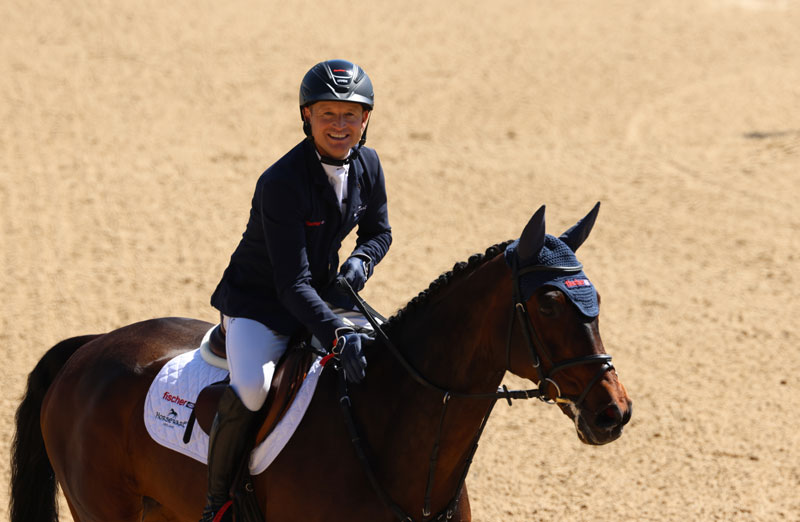
Originated in the late 18th century as a part of Foxhunting, Show Jumping is a lot of fun and improves the agility and focus of both horse and rider. It utilizes physical skills to negotiate a series of obstacles, and mental skills to plan the proper lines and approaches to allow the horse to jump those obstacles. The jumps are colorful and of varying heights and widths. Wide jumps or 'spread jumps' may include water that horses must leap over, but not touch. Each course is intended to demonstrate the horse’s freedom, energy, training and obedience, as well as the rider’s horsemanship. The goal of the horse rider combination is negotiating the course without errors or disobediences.
 
At Pony Club Championships, Show Jumping takes place over a three-day period in which the competitors face the challenge of five entirely different courses (rounds). On the final day, the horse and rider gain an additional challenge: if they have jumped without penalties, they then immediately attempt a modified course as a timed jump-off. Pony Club Show Jumping Competition is a team sport with Horse Management playing a significant role. Competitors working together develop a rapport and team camaraderie. Some teams are composed of competitors from several regions and develop special friendships and lasting relationships. The winning team is the one that accumulates the fewest penalty points. 
 
Visit the United States Hunter Jumper Association to learn more about Show Jumping and check out the Pony Club Show Jumping site for information on Pony Club activities and opportunities in the discipline of Show Jumping.


Tetrathlon
 
Tetrathlon is a challenging competition requiring sound horsemanship and general athletic ability. Its goal is to encourage Pony Club members to broaden their interest in riding and multiple sports. The development of Tetrathlon within Pony Club has been sought by the U.S. Modern Pentathlon and Olympic Committees as a means of developing multi-talented athletes. They offer guidance and training programs for outstanding athletes who meet their requirements for skill and endurance.
 
The riding phase provides an opportunity to demonstrate equestrian skills over a stadium or cross-country course.  The running phase challenges each competitor’s physical stamina and endurance over cross country terrain and may include negotiating obstacles such as hay bales, logs and low event fences. The shooting phase tests a competitor’s skill, in a standing position, using an air pistol on a 10-meter course. The swimming phase allows competitors to demonstrate their swimming skills over a course length in meters or yards.
 
Visit USA Pentathlon for more information on the sport on which Tetrathlon is based and check out the Pony Club Tetrathlon site for information on Pony Club activities and opportunities in the sport of Tetrathlon.


Additional Pony Club Disciplines
 
Polo
 
Polo is a team sport played on horseback in which the objective is to score goals against an opposing team. Sometimes called, "The Sport of Kings", it was highly popularized by the British. Mounts need to trained to be obedient, while the riders becoming active and practical horsemen who will compete with enthusiasm and determination. A Polo competition has served its purpose when the riders have learned better horsemanship, sportsmanship, and safety procedures.
 
In Pony Club the sport of polo is played in an arena (but may be played outside) and each polo team consists of three riders and their mounts. There are three levels of competition – Novice, Intermediate, and Advanced. Players score by driving a small air-filled ball, similar to a small soccer ball, into the opposing team's goal using a long-handled mallet. The game is divided into periods called chukkers, which last 7 ½ minutes in length of time each.
 
Visit the United States Polo Association for more information on Polo and check out the Pony Club Polo site for information on Pony Club activities and opportunities in the sport of Polo.
 
 
Hunter Seat Equitation was added in 2012 as specific discipline track for which members could earn Certificates. The Hunt seat style of riding is derived from the hunt field and Equitation is the art or practice of horse riding or horsemanship. More specifically, equitation refer to a rider's position while mounted, and encompass a rider's ability to ride correctly and with effective aids. In equitation competition, flat classes include judging at the walk, trot, and canter. In over fences classes, the competitor rides over a course jumps in any arena. There is no cross country jumping, as in Eventing.

Visit the United States Hunter/Jumper Association for more information and check out the Pony Club Hunter Seat Equitation pages to learn more.
 
 
Western - Pony Club is running a two year pilot program where members in select clubs or centers may earn Certificate in the Western discipline. Western riding is a style of horseback riding which evolved from the ranching and warfare traditions brought to the Americas by the Spanish Conquistadors. Cowboys needed to work long hours in the saddle over rough terrain, sometimes needing to rope cattle with a lariat (or lasso). Because of the necessity to control the horse with one hand and use a lariat with the other, western horses were trained to neck rein, that is, to change direction with light pressure of a rein against the horse's neck. Horses were also trained to exercise a certain degree of independence in using their natural instincts to follow the movements of a cow, thus a riding style developed that emphasized a deep, secure seat, and training methods encouraged a horse to be responsive on very light rein contact.

Though the differences in equipment appear dramatic, fewer differences between English and Western riding exist than most people think. Both styles require riders to have a solid seat, with the hips and shoulders balanced over the feet, with hands independent of the seat. As in English, there are many styles of Western, and Pony Club members may be exposed to these different styles of riding.
 
 
Foxhunting – Tally ho! USPC was founded by a group of enthusiastic foxhunters who were familiar with The Pony Club in Britain. Many clubs today are still affiliated with a local hunt and are invited to participate in their hunts. Or clubs may expose members to Foxhunting by holding mock foxhunts. Hunter paces and hunter trials are also ways to introduce members to the sport. Visit the Masters of Foxhounds Association of America for more information and check out the Pony Club Foxhunting site for information on Pony Club activities and opportunities in the sport of Foxhunting.
 
Driving - The sport of Combined Driving is similar to the discipline of Eventing, where the horse must perform in three different phases.  The first day is Dressage, testing balance, flexibility, and submission of the horse. Second day is Cross Country Marathon with up to eight special obstacles or hazard testing the horses endurance and stamina over distance. The third day is Cones, which tests the concentration and self control of both horse and driver as they negotiate between sets of cones laid out in an elaborate course.
  
Penalty points are incurred in each of the above phases and the winner is the entry who accumulates the fewest points. Horses and ponies compete separately in these categories: single— one horse/pony; pairs—two horses/ponies side by side; tandem—two horses/ponies, one in front of the other; and Teams—four horses/ponies—two pair, one in front of the other.    Visit the American Driving Society to learn more.
 
 
Distance Riding - In Pony Club, the discipline of Distance Riding is a combination of Endurance Riding and Competitive Trail.  Participating in Distance Riding members will learn about the conditioning of horse and rider over long distances.  During a Distance Riding activity, the winning horse is the first one to cross the finish line while stopping periodically to pass a veterinary check that deems the animal in good health and fit to continue.  Visit the American Endurance Ride Conference and the North American Trail Ride Conference for more information on these sports.
  
Vaulting is gymnastics on a moving horse, an ancient sport that had its beginnings in the bull vaulting of the ancient Minoans. It was used in the training of cavalry troops since Roman times, throughout the Middle Ages and into the Twentieth Century. Vaulting became an Olympic event in the 1920 Olympic Games in Antwerp, where the competitors were cavalry teams.   Visit the American Vaulting Association for more information on the sport of Vaulting.
 

Search Our Site
Sign In

Username
Password

Forgot your password?

Haven't registered yet?

Calendar

WANNA READ ABOUT IT? 

Check out the USPC Equine Bookstore.  With over 400 titles covering a wide range of topics from the basics of stabling, grooming and riding skills to training, teaching, and horse health, there's something for all levels of equestrians and horse enthusiasts. 

And don't forget to browse through the selection of Pony Club shirts, caps, mugs, and other great USPC apparel and items.


Make a Donation

Thank you to our Sponsors!

Become a Sponsor


Riding Center
Program Sponsor


NYC/AoA
Program Sponsor

And thank you for the support of our Business Associates.